The 6-0 Screw
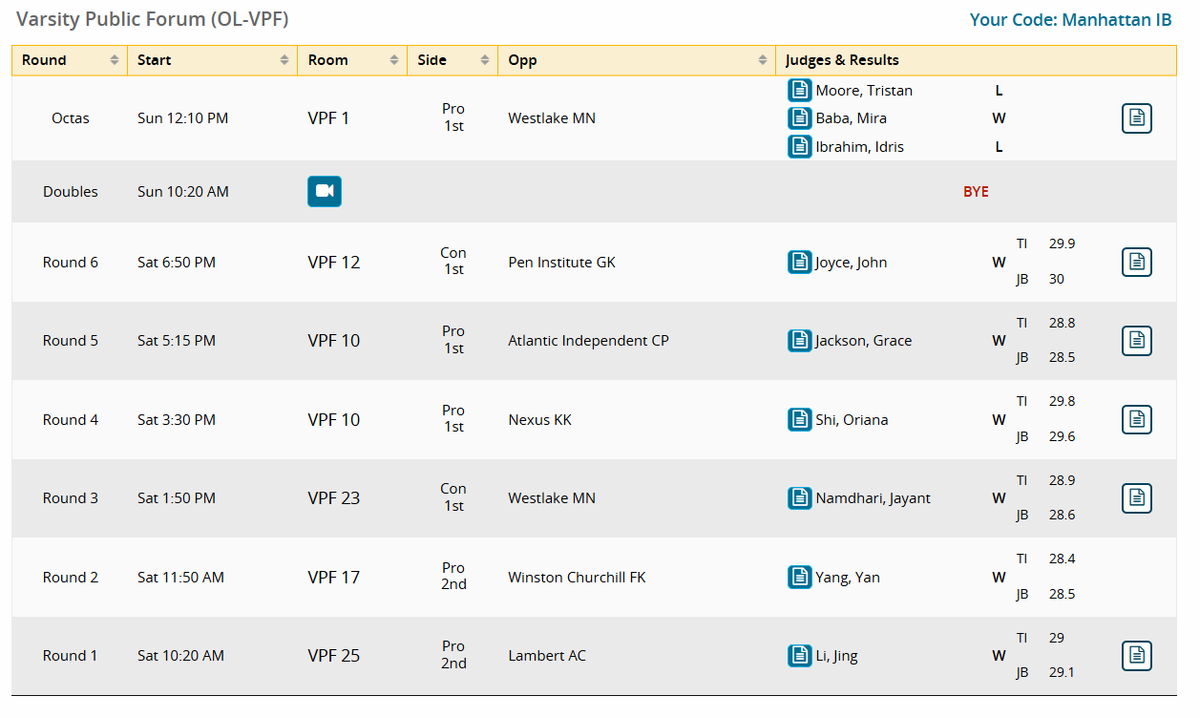
As a result of massive effort and skill, you went undefeated in prelims. Elim pairings come out. It’s you against two sophomore lay debaters, and it’s a tech panel. Later, as you patiently await the RFD, you’re confident and already checking the bracket and prepping out your next opponents. You hear the words “it was a 3-0” and already know what comes next. Until, the judge finishes their sentence—”for the negative.” The world goes silent. Your ears ring. What just happened?
The 6-0 screw is a well-known phenomenon across all debate events. But does it really exist? And why?
To look into the data, we have to define our terms. A 6-0 team that loses the first elimination round they debate, excluding a bye or walkover, has fallen victim to the 6-0 screw.
In every large PF bid tournament between UKSO and Milo, we collected data on all the 6-0 teams. Exactly ⅓ or ~33% of 6-0 teams lose their first elimination round. Considering that they are seeded against the worst 4-2s, this is shocking.
But what does this number mean? Well, the expected win rate of 6-0 teams in the first seeded elimination round would be close to 100%, since they are the best teams facing the worst teams (who broke). That’s a statistically significant difference, so there’s something going on here.
Several tournaments are notable for the sheer amount of 6-0 screws. Both 6-0 teams at the FBK RR lost doubles. Half of the 6-0s at Berkeley and Bronx were screwed.
But why does this happen so much? There’s a few explanations:
- Overconfidence. A 6-0 team is going into their first elimination round expecting a win, not expecting a close/hard debate. Whether on purpose or accidentally, they might try less to win or perform worse.
- Good 4-2s with bad speaks. Some of the best teams in the pool might get screwed twice, or have to forfeit, or just lose the round. These best teams might, unexpectedly, have low speaks for a multitude of reasons. Most commonly, low point wins due to the judge's dislike of argumentative terrorism against less experienced teams.
- Fatigue. Due to power matching, 6-0 teams are usually exhausted after hitting the best teams in the pool all day Saturday before having to debate the first and only elim of the day at night.
So, which of these is it? Well, to find out, here’s a table of 6-0 teams and who they lost to.
Highlighted in yellow are instances of two good teams who happened to be paired together (subjective, I know).
So, does the 6-0 screw exist? Yes. Why? The best 4-2s seem to have the worst speaks!